


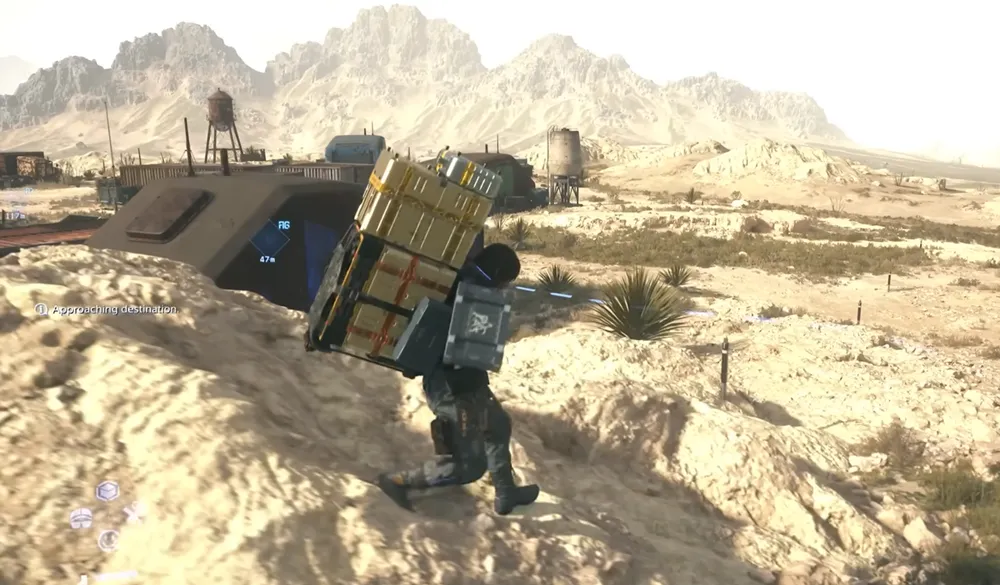
When it comes to games that divide, Death Stranding has always stood apart. Some dismissed the first entry as a “walking simulator,” while others hailed it as an avant-garde masterpiece. With Death Stranding 2: On the Beach, Hideo Kojima once again demands patience, but the reward is unlike anything else in gaming. I’ve spent more than 40 hours on PS5 immersed in its strange rhythm of deliveries, and the question that lingers—“Where should I deliver this?”—is less about parcels than about purpose. Is it worth the trek? The answer, as always with Kojima, is complicated.
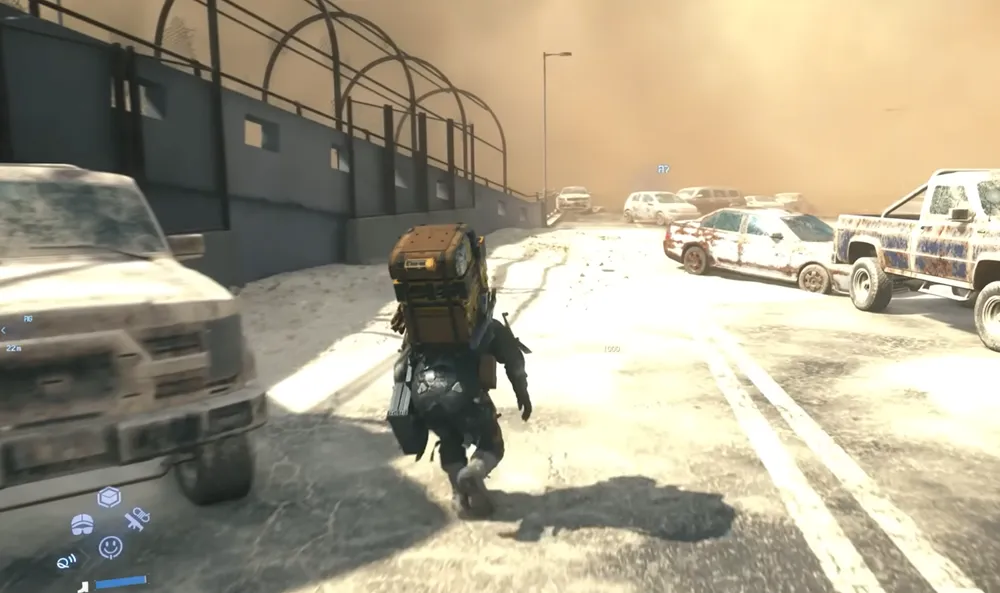
Traversal: On Foot, By Bike, or Something Stranger
At the heart of Death Stranding 2 remains the question of how to cross landscapes that resist you. Going on foot is still the purest, most difficult form of traversal. The PS5 haptics make each stumble feel tactile—you sense the weight of the cargo pulling at your shoulders, every slip on wet stone echoing in the controller. It’s brutal, sometimes punishing, yet it captures a beauty in fragility. Walking forces you into intimacy with the environment, and the world answers back with quiet hostility and rare moments of serenity.
Vehicles, by contrast, are faster and smoother. At first, I relied heavily on them, thrilled by the speed, the wind rushing as Icelandic tundra or Australian plains blurred past. But speed comes at a cost. Vehicles tether you to flatter paths, limit exploration, and sometimes rob you of the connection between Sam and the world. A bike will get you there, but walking lets you arrive.
Later, gadgets and exoskeletons complicate the question further. They become tempting shortcuts, but each one risks undercutting the tension that defines Death Stranding. The game never hides its central dilemma: is the delivery about efficiency, or about the act of carrying itself?

The Story: Tragedy, Connection, and Endurance
The opening hours of Death Stranding 2 are among the most tragic I’ve experienced in a game. Kojima doesn’t shield you from loss; he sets it on your shoulders, heavy as any cargo. Lou’s absence — or rather the echo of her absence — lingers over every step, and it becomes difficult to move forward not because of difficulty, but because of grief. This is not just a narrative hook; it is a burden, one that makes the simple act of delivery feel almost cruel in its insistence.
As the hours unfold, the story shifts into something quieter, less driven by spectacle than by reflection. Sam is not a hero now but a weary figure, asked to walk again despite all that he has lost. Fragile’s return offers some solace, and new companions aboard the DHV Magellan give shape to a fractured sense of community. Characters like Dollman, Tomorrow, and Rainy widen the frame from solitude to ensemble, though the silence between them still hangs heavy. For some, these chapters will feel slow. For me, they felt like breathing space — long pauses where the game asked not “what happens next?” but “what are you willing to carry?”
Pros and Cons of Delivery Systems
Much like comparing payment processors, delivery methods in Death Stranding 2 each come with their trade-offs.
On Foot
-
Pros: Maximum immersion; intimacy with the world; most rewarding when successful.
-
Cons: Slow, physically draining (both for Sam and the player’s patience); higher risk of failure.
Vehicles (Bikes, Trucks, Mechs)
-
Pros: Fast, efficient; essential for long distances or heavy cargo.
-
Cons: Limited access; less emotional resonance; mechanical glitches occasionally disrupt the ride.
Assisted Systems (Floating Carriers, Robotic Helpers)
-
Pros: Reduce burden; allow creative strategies; good for larger-scale connections.
-
Cons: Can undercut the core tension of fragility; less personal; sometimes buggy in crowded terrain.
Ultimately, the choice of how to deliver isn’t mechanical but philosophical. Do you want to experience the pain of the journey, or the relief of its completion? Kojima forces you to choose again and again, and in that repetition, meaning emerges.

Who Should Deliver How?
For players new to Kojima’s worlds, the vehicles will feel like a blessing. If you value efficiency and prefer action over introspection, lean on the bikes and trucks. They provide enough thrill to counter the stillness, and their utility is undeniable.
For veterans of the original Death Stranding, walking remains the truest form of engagement. Every stone you balance across, every slope you conquer, echoes what made the first game unforgettable. These players—those who find beauty in slowness—will know that the delivery is not about what you carry, but that you carry.
And for those who want a hybrid experience, the gadgets and assisted carriers open new strategies. These tools strike a middle ground, allowing you to manage larger missions without losing all sense of vulnerability. They’re not perfect, but they expand the scope of play and underline Kojima’s fascination with how technology both connects and isolates us.
Final Thoughts
Death Stranding 2: On the Beach is not for everyone. If you struggled with the first, nothing here will convert you. The pacing is slow, sometimes glacial, and the tragedies of its story can weigh too heavily. Yet for those willing to surrender to its rhythm, this sequel delivers something rare: a game that makes you feel the act of moving, of carrying, of enduring.
The PS5 performance is stellar, the soundtrack unforgettable, and Norman Reedus’ portrayal of Sam may be the best of his career. But beyond graphics, beyond mechanics, Death Stranding 2 asks a question no other game dares: where should we deliver our burdens, and why?
For me, after forty hours, the answer was simple. I delivered them into the game itself, and came out lighter.

