


Top 5 Games Coming in August 2026
August 2026 is not interested in giving anyone time to finish their backlog.
The month opens with a strange and ambitious action RPG from Game Freak, moves almost immediately into a Marvel fighting game built by Arc System Works, then closes with two major releases landing on the exact same day. Somewhere in the middle, there is also a colourful platforming adventure involving a mechanical bird and a Clock Tower that has apparently decided daylight is optional.
What makes August interesting is how little these games have in common. There is a classic 3D platformer, a four versus four fighting game, a post apocalyptic action RPG, a Star Wars tactics campaign, and a darker return to the world of A Plague Tale.
It is a month full of familiar names taking unfamiliar shapes.
Here are the top five games to keep an eye on in August 2026.
5. Duskfade
Duskfade looks like it comes from a time when 3D platformers were allowed to be sincere.
You play as Zirian, a young hero travelling with a mechanical Cuckoo as he attempts to rescue his sister from a mysterious Clock Tower. The tower has trapped the world in eternal night, which is a rather dramatic response to whatever disagreement started all of this.
The setup is simple, but that is part of the appeal. Duskfade is not presenting itself as a sprawling hundred hour epic with twelve political factions and an encyclopaedia hidden inside the pause menu. It is an action platformer about movement, colourful worlds, strange machinery, and saving someone who matters.
Traversal appears to be the real heart of the game. Zirian can jump, dash, grapple, glide, and swing through environments ranging from forests and deserts to underwater regions and cloudy heights. Combat is mixed directly into that movement, with fast sword attacks and aerial abilities designed to maintain the pace rather than stopping every few minutes for a separate battle arena.
That combination matters. A lot of modern platformers understand how to recreate the appearance of older games, but fewer remember how important momentum was. The best examples made simply crossing a room feel playful. You were not walking toward the next interesting part. Walking there was the interesting part.
Duskfade also seems confident enough to be colourful without turning every scene into a joke. Its world is bright and fantastical, but the story is built around separation, lost time, and a land where morning never arrives. There is a slightly melancholy quality beneath all the jumping and sword swinging.
The concern is whether its combat and platforming can remain varied across the full adventure. Nostalgia can introduce a game, but it cannot carry one. Duskfade will need memorable levels, satisfying movement upgrades, and enough surprises to stop its Clock Tower from feeling like a collection of familiar ideas wearing a beautiful coat.
Still, there is something refreshing about a game that seems to know exactly what it wants to be. No seasonal roadmap. No extraction mode. Just a young hero, a mechanical bird, and an unreasonable amount of platforming.
Duskfade launches August 13 for PC, PS5, and Xbox Series X|S.
4. Marvel Tōkon: Fighting Souls
Marvel characters have appeared in plenty of fighting games, but Marvel Tōkon: Fighting Souls has one advantage that immediately changes the conversation.
Arc System Works is making it.
That is the studio behind some of the most visually confident fighting games around, and Tōkon looks like a collision between Japanese animation, American comic books, and the kind of impact frames that make every punch feel personally offended.
The game is built around four versus four team battles. That sounds intimidating, particularly for anyone who already struggles to remember what one character does, but the design is meant to avoid forcing players to master four complete move sets before they can enjoy themselves. The wider team supports the character you control, creating assists, combination attacks, and tactical options without turning every match into an exam.
That accessibility could be the game’s smartest idea. Tag fighters are exciting because they create chaos, improvisation, and ridiculous combinations. They are also capable of making new players feel as though they have accidentally entered a professional chess tournament where the pieces can shoot lasers.
Tōkon needs to preserve that spectacle while making its systems readable.
The reworked character designs are already doing plenty of heavy lifting. Rather than simply taking familiar heroes and placing them into another fighting game, Arc System Works has rebuilt the Marvel cast around a shared visual identity. Characters such as Storm, Wolverine, Magik, Danger, Spider Man, Captain America, Doctor Doom, and Iron Man look recognisable, but not trapped inside designs we have already seen hundreds of times.
There is also an Episode Mode using motion comic presentation, manga inspired artwork, voice acting, and an original threat created for this version of the Marvel Universe. It may not be the main reason most players arrive, but it gives the game something beyond online matches and training rooms.
Fighting games often build fascinating worlds, then leave most of the storytelling buried inside character endings that last four minutes. Tōkon appears more interested in making its universe feel deliberate.
The obvious challenge is balance. Four character teams create a terrifying number of possible combinations, and fighting game players possess a supernatural ability to discover something completely unreasonable within hours of release. One assist will almost certainly become everyone’s problem.
But that is also part of the fun. A Marvel fighting game should feel excessive. It should contain improbable teams, screen filling attacks, and arguments about whether Doctor Doom is once again far too powerful.
Marvel Tōkon: Fighting Souls launches August 6 for PS5 and PC.
3. Resonance: A Plague Tale Legacy
Resonance: A Plague Tale Legacy is doing something more difficult than simply continuing a successful series.
It is changing the type of story that series can tell.
Set fifteen years before the previous A Plague Tale games, Resonance follows a younger Sophia as she travels to the mysterious Minotaur’s Island in search of answers about her past. Players who remember Sophia from Requiem already know the confident smuggler she eventually becomes. Resonance is interested in the person she had to survive becoming first.
That gives the prequel an actual reason to exist. It is not filling in a blank because the timeline had some empty space. It is taking a supporting character with an established future and asking what that confidence cost her.
The gameplay is also moving in a more direct direction. Sophia is faster and more capable in a fight than Amicia or Hugo. She uses a sword, dagger, grappling hook, precise parries, and aggressive combinations to control groups of enemies. Stealth still exists, but Sophia appears far more comfortable meeting danger halfway.
That change makes sense for the character, but it also introduces the game’s biggest risk. A Plague Tale built much of its identity around vulnerability. Enemies were frightening because direct combat was usually a desperate final option. Give the player a sword and a reliable parry, and the entire emotional temperature changes.
Resonance needs Sophia to feel capable without making the world feel harmless.
The Minotaur’s Island could be what holds everything together. Its ancient puzzles revolve around light, hidden mechanisms, and Minoan ruins. As Sophia travels deeper, she experiences visions connected to Theseus, creating a story that moves between the medieval world and events more than two thousand years earlier.
That is a much larger mythological swing than the series has taken before. A Plague Tale has always mixed history with supernatural horror, but Resonance appears ready to walk directly into the labyrinth.
The title suggests that the past is not simply being remembered. It is echoing through Sophia. Ancient events, the Macula, the island’s curse, and her own history are colliding across time.
Most importantly, it still looks like an Asobo game. The environments are beautiful in a way that makes every ruined chamber feel slightly mournful. The violence is ugly rather than glamorous. The characters look exhausted before the adventure has properly begun.
There may be fewer rats dominating the screen this time, but the series has never really been about rats. It is about people trying to preserve some piece of themselves while history, disease, violence, and fate close around them.
Resonance looks ready to place Sophia inside that pressure and finally show us what survived.
Resonance: A Plague Tale Legacy launches August 27 for PC, PS5, and Xbox Series X|S. It will also join Game Pass on release day.
2. Star Wars: Zero Company
Star Wars: Zero Company is taking the Clone Wars and focusing on the part usually hidden between the enormous battles.
The quiet operations. The expendable squads. The missions that determine what happens next without earning anyone a medal ceremony.
Developed by Bit Reactor, Zero Company is a single player turn based tactics game led by Hawks, a former Republic officer commanding an unconventional group of operatives. The squad can include Clone Troopers, smugglers, aliens, astromechs, a Mandalorian, and even a Jedi Padawan, because apparently assembling a normal military unit would be far too straightforward.
The XCOM comparison is unavoidable, but Zero Company seems to understand that borrowing a tactical structure is not enough. It needs to make that structure feel specifically like Star Wars.
Between missions, players return to a base called the Den. Operatives can be recruited and upgraded, facilities can be improved, equipment can be purchased, and new assignments can be selected from the holotable. An intelligence network spreads across the galaxy, while decisions made during the campaign influence missions and the direction of the story.
On the battlefield, positioning, abilities, environmental hazards, and squad relationships all matter. Characters who fight together can form stronger bonds and unlock support abilities or combat synergies. Custom operatives can also be created from different species and classes, allowing players to build a squad that feels personal rather than borrowing the same fixed team for every campaign.
That last part could make the losses hurt.
Tactics games are at their best when a unit stops feeling like a collection of numbers and starts feeling like a person you are responsible for. Star Wars is unusually well suited to that idea. Clone Wars stories have always carried the knowledge that these soldiers are caught inside a conflict designed by people who see them as pieces on a board.
Zero Company is simply handing you the board.
The challenge will be consequence. The game keeps emphasising decisions, relationships, and an evolving campaign. Those systems need to produce meaningful differences rather than occasionally changing a line of dialogue before everyone returns to the same mission.
There is also the familiar Star Wars problem. The galaxy is enormous, but its stories sometimes behave as though every important person shares the same local café. Zero Company will be stronger if it trusts its new cast instead of constantly reaching for familiar characters to reassure the audience.
Still, the premise fits the universe beautifully. Star Wars has lightsabers, space battles, and ancient prophecies, but it also has desperate people making impossible choices in corridors full of battle droids. A proper tactics game has been waiting inside that second version for years.
Star Wars: Zero Company launches August 27 for PC, PS5, and Xbox Series X|S.
1. Beast of Reincarnation
Beast of Reincarnation is the game most likely to make people say, “Game Freak made this?”
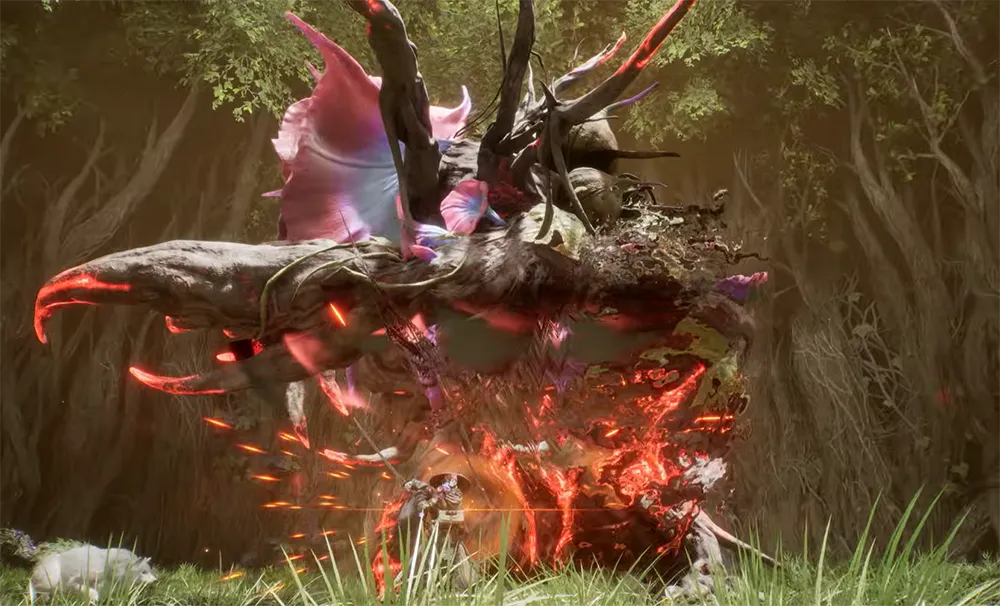
The studio is inseparable from Pokémon, but this is not a cheerful journey about collecting creatures and politely defeating local children. It is a post apocalyptic action RPG set in Japan in the year 4026, where civilisation has been consumed by blight and enormous creatures can transform ruined landscapes into violent forests.
You play as Emma, an outcast whose body has fused with the blight. She travels alongside Koo, a canine creature considered dangerous by the surviving world. Emma is expected to hunt beings like Koo, which makes their partnership inconvenient in precisely the way good stories tend to enjoy.
The unusual part is how the pair fight together.
Emma handles fast sword combat in real time, using parries, movement, and katana attacks. Successful defensive play earns points that can be spent on Koo’s abilities. Opening Koo’s command menu slows the battle, giving players time to assess the situation and choose an ability in a system inspired by command based RPGs.
It is a clever compromise between reflex and strategy. Plenty of action RPGs give the player an artificial intelligence companion, but the relationship often amounts to watching that companion attack whichever enemy happens to be nearby. Beast of Reincarnation is trying to make Koo feel like an active half of the combat system.
That is important because the entire game appears to be built around the bond between these two characters. Koo is not just a dog included to make the trailer more emotionally dangerous. Emma and Koo depend on each other mechanically, narratively, and probably in several scenes designed to make players deeply nervous whenever they become separated.
The world may be just as important as the combat. Blight can alter environments in real time, causing vegetation to erupt through wastelands and introducing new creatures into areas that previously appeared safe. Giant bosses known as Nushi control these transformed regions, and defeating them allows Emma and Koo to absorb new powers needed for the journey ahead.
There is a risk that Beast of Reincarnation is trying to hold too many ideas at once. Technical sword combat, tactical commands, equipment builds, environmental transformations, large bosses, stealth options, and an emotional companion story all need room to work.
But ambition is exactly why it is so interesting. Game Freak could have made something smaller and safer outside Pokémon. Instead, it has made a science fiction action RPG about a cursed woman and a dangerous dog crossing a ruined Japan where everyone has secrets and looking at the sky is apparently a terrible idea.
Beast of Reincarnation launches August 4 for PC, PS5, and Xbox Series X|S. It will also be available through Game Pass on release day.
Final Thoughts
August 2026 has a remarkably balanced group of releases.
Duskfade is bringing back the energy of classic 3D platformers. Marvel Tōkon: Fighting Souls is giving Arc System Works an entire superhero universe to redesign and throw across the screen. Resonance: A Plague Tale Legacy is asking whether A Plague Tale can become something more confrontational without losing the vulnerability that gave the series its identity.
Star Wars: Zero Company is turning the Clone Wars into a campaign of difficult tactical decisions.
And Beast of Reincarnation could prove that Game Freak’s most interesting future is not limited to the series that made its name.
That is the game I will be watching most closely.
Sophia already has a destination. We know part of the person she eventually becomes. Resonance has the harder task of showing us the fear, violence, and impossible choices that shaped her.
Sometimes knowing where a character ends up does not remove the tension.
It makes the journey there hurt more.

